Bulletin Search
Responsible Use of Artificial Intelligence in Real Estate
The use of artificial intelligence (“AI”) is rapidly transforming the workplace. According to a recent report by Gallup, 45% of employees surveyed reported using AI at least a few times a year to help save time and improve efficiency by automating basic tasks, consolidating data, and making predictions, among others[1].
The rise in the use of AI in real estate can be seen with marketing materials, such as social media content and virtual staging, Chatbots that communicate with customers and/or clients, and in lead generation. While AI presents many ways to positively enhance the workplace, there are challenges that cannot be ignored. Responsibly using AI in your real estate practice requires careful consideration of the following:
Privacy and Client Confidentiality AI content is generated by patterns derived from datasets. The information provided to AI is generally stored and used to improve future responses. Are you using AI to review contracts and documents that contain personal identifying information (PID) for your clients such as a date of birth or social security number? Do you provide AI with bank account information to assist in trust account reconciliation? This data is retained by AI and poses a significant confidentiality risk and a potential breach of your fiduciary duty to your client. Consider what steps you have taken to ensure that this sensitive client information is protected when using AI and make sure your clients PID is protected. You should also discuss the use of AI with your clients and obtain their permission prior to using any AI tools to assist in your representation that include PID.
Compliance with Law and Commission Rules There are a number of ways in which AI can be inaccurate – sometimes with wrong or fake information or by completely omitting information. AI is also known to have algorithmic bias and therefore potentially violate the Fair Housing laws. Never assume that the information obtained from AI tools is accurate. Did you use AI to assist in marketing a property you have listed for sale? You are responsible for the representations made in the advertisement and should check for accuracy.
If you are using AI in your brokerage, the Commission recommends that you develop policies and procedures to ensure that the information generated by AI complies with the law and Commission rules. Conduct internal audits, provide employees with routine training, and stay up to date on the rapidly changing AI environment.
[1] “AI Use at Work Rises” https://www.gallup.com/workplace/699689/ai-use-at-work-rises.aspx
Disciplinary Actions
JAMES BAKER, JR. (WILSON)- By Consent, the Commission reprimanded Baker, effective December 12, 2025. The Commission found that Baker acted as the listing agent on a failed transaction. During the course of the transaction, the buyer placed a stop payment order on their earnest money check and Baker’s seller, who lived out of state, wanted to sue the buyer for the earnest money. Baker, who is not an attorney, filed a civil complaint in Small Claims court on behalf of his client for the disputed funds.
BLUE MOON PROPERTIES LLC (CARRBORO)- By Consent, the Commission suspended the broker license of Blue Moon Properties LLC for a period of 12 months, effective December 12, 2025. The Commission then stayed the suspension in its entirety upon certain conditions. The Commission found that Blue Moon Properties LLC advertised a property for rent located in a neighborhood where the HOA covenants did not allow leases of less than six months. Blue Moon Properties LLC had a tenant sign a 6-month lease and then, on the same day, a lease termination agreement that ended the 6-month lease after a one-month period as a way to avoid the HOA covenants. Blue Moon Properties LLC commingled funds.
GRACIE DOERTER (CHARLOTTE)- The Commission accepted the permanent voluntary surrender of the real estate license of Doerter, effective December 17, 2025. The Commission dismissed without prejudice allegations that Doerter violated provisions of the Real Estate License Law and Commission Rules. Doerter neither admitted nor denied misconduct.
BRIAN ENGLISH (CHARLOTTE)- By Consent, the Commission reprimanded English, effective December 15, 2025. The Commission found that English listed a residential property for sale in the same neighborhood in which he lived. Despite being informed by the buyer’s agent that the prospective buyers intended to use the subject property as a rental, he failed to disclose that the neighborhood’s restrictive covenants prohibited owners from renting their property within the first 12 months of ownership.
SANDRA MCCAULEY (GREENSBORO)- By Consent, the Commission suspended the broker license of McCauley for a period of 24 months, effective December 15, 2025. The Commission found that McCauley, while acting as the listing agent for a property, advertised that the property had new heating and air, when in fact, the heating and air system that was installed in the house was manufactured in 2015 and consisted of mixed and matched parts. McCauley failed to respond within 14 days to two separate Letters of Inquiry sent to her email address on record with the Commission.
NDG STUDENT LIVING LLC (RALEIGH)- The Commission accepted the permanent voluntary surrender of the real estate license of NDG Student Living LLC, effective December 17, 2025. The Commission dismissed without prejudice allegations that NDG Student Living LLC violated provisions of the Real Estate License Law and Commission Rules. NDG Student Living LLC neither admitted nor denied misconduct.
GUILIANO POSTEK (CHAPEL HILL)- The Commission accepted the voluntary surrender of the real estate license of Postek, effective December 17, 2025, with no right to reapply for 10 years. The Commission dismissed without prejudice allegations that Postek violated provisions of the Real Estate License Law and Commission Rules. Postek neither admitted nor denied misconduct.
REILYN POWELL (CHARLOTTE)- By Consent, the Commission suspended the broker license of Powell for a period of 24 months, effective October 1, 2025. The Commission then stayed the suspension following a two-month active suspension period upon certain conditions. The Commission found that Powell was denied passing scores by the provider of a post-licensing course for alleged cheating on two remote proctor-free exams. Video of the exam shows Powell repeating questions aloud while a device is nearby making a noise. Powell later admitted using an AI app on her phone to answer exam questions. Powell retook and completed both post-licensing courses and exams and is now a full broker.
ELAD SELA (CARRBORO)- By Consent, the Commission suspended the broker license of Sela for a period of 12 months, effective December 12, 2025. The Commission then stayed the suspension in its entirety upon certain conditions. The Commission found that Sela was the property manager for a home located in a neighborhood where the HOA covenants did not allow leases of less than six months. Sela had a tenant sign a 6-month lease and then, on the same day, a lease termination agreement that ended the 6-month lease after a one-month period as a way to avoid the HOA covenants. Sela also commingled funds.
THE PROPERTY GROUP OF NC INC (PINETOWN)- The Commission accepted the permanent voluntary surrender of the real estate license of The Property Group of NC Inc., effective December 17, 2025. The Commission dismissed without prejudice allegations that The Property Group of NC Inc. violated provisions of the Real Estate License Law and Commission Rules. The Property Group of NC Inc. neither admitted nor denied misconduct.
VIRIDIANA URBINA (SOUTHERN PINES)- By Consent, the Commission suspended the broker license of Urbina for a period of 12 months, effective December 15, 2025. The Commission then stayed the suspension in its entirety upon certain conditions. The Commission found that Urbina listed a house for sale and advertised that it was “totally renovated from top to bottom, new roof, new HVAC.” Urbina relied upon her seller’s representations and failed to accurately disclose that neither the roof nor the HVAC were new, and that the HVAC replacement permit was not obtained from the county.
ERIN WARWICK (CHARLOTTE)- By Consent, the Commission reprimanded Warwick, effective December 15, 2025. The Commission found that Warwick was the buyer’s agent in a residential real estate transaction in which the closing was delayed. Warwick allowed her buyer to remain in the subject property before the closing occurred without the permission of the sellers.
Employment Opportunities
Are you interested in joining the staff of the North Carolina Real Estate Commission? The Commission is currently seeking an Education Officer and a Software Developer. These positions are posted on the Commission’s website. Click here for more information regarding these positions.
Commission Presentations
December 2025 Presentations
Bruce Rinne, Information Officer, spoke at Urban Durham Realty on December 9th.
Miriam Baer, Executive Director, spoke at Jacksonville Board of REALTORS® on December 10th.
January 2026 Presentations
*These presentations are subject to change due to the availability of Commission members and/or staff.*
Minerva Mims, Fair Housing and Community Relations Officer, will speak at HPW Rentals on January 9th.
Charlie Moody, Deputy Legal Counsel, will speak at Berkshire Hathaway HomeService Prime Properties on January13th.
Sarah Dixon, Associate Legal Counsel II, will speak at OWN Real Estate on January16th.
Dee Bigelow, Information Officer, will speak at Acorn + Oak Property Management on January 20th.
Miriam Baer, Executive Director, will speak at the Fayetteville Real Estate School on January 30th.
Fair Housing
Understanding the difference between service animals and emotional support animals (ESAs) is essential for housing providers, and equally important for consumers. While both play vital roles in supporting individuals with disabilities, the laws governing them are different. The overview below is designed to help you better understand what qualifies as a service animal, what defines an ESA, and the rights and responsibilities associated with each.
Service Animals
- Definition: Dogs (and in some cases miniature horses) trained to perform specific tasks directly related to a person’s disability.
- Applicable Laws: Protected under the Americans with Disabilities Act (ADA) in public places and the Fair Housing Act (FHA) in housing.
- Housing Requirements: Must be permitted in all rental properties, including those advertised as “no pets.” Housing providers cannot charge pet fees or impose breed/size restrictions.
- Examples of Tasks: Guiding individuals who are blind, alerting someone who is deaf, pulling a wheelchair, or detecting seizures.
Emotional Support Animals (ESAs)
- Definition: ESAs offer therapeutic benefits by providing comfort or companionship, but are not trained to perform specific tasks. While ESAs are most commonly dogs or cats, many domestically kept animals can serve in this role.
- Applicable Laws: Protected under the Fair Housing Act (FHA).
- Housing Requirements: Must be accommodated in rental housing. Where a request for an emotional support animal poses a direct threat to the health or safety of others, or where the accommodation creates an undue burden, the accommodation request may be denied. Documentation from a medical provider explaining the need for the ESA is required.
- Examples of Support: Reducing anxiety, alleviating depression, or providing companionship.
Key Distinctions
- Service Animals: Task‑trained, covered by ADA and FHA, required in residential housing and public spaces. .
- ESAs: Provide emotional support, covered only by FHA required in residential housing. Sufficient documentation can be required.
Best Practices for Housing Providers
Consult legal counsel to ensure compliance with federal and state laws.
Adopt a written policy that clearly distinguishes between service animals and ESAs.
Accept ESAs when they are required for a disability and supported by appropriate medical documentation.
Apply policies consistently and fairly to avoid discrimination.
Tech Corner: The Future of Real Estate Technology

As we step into 2026, it’s an exciting time to reflect on the progress real estate professionals have made—and to look ahead at the innovations that will shape the industry in the coming year. In 2025, Tech Corner articles helped licensees navigate key topics like digital signatures, compliant advertising, professional social media use, and more. For those who stay informed and adapt thoughtfully, 2026 promises to bring new tools, efficiencies, and opportunities.
2025 in Review: A few topics shared this year
In April, we summarized a presentation from The North Carolina Real Estate Commission’s annual Educator’s Conference, which featured a session on how real estate educators and brokers can use artificial intelligence tools to improve advertising, marketing, and training. Presenters highlighted a variety of free and accessible AI resources like ChatGPT, Adobe Firefly, Google Gemini, and Canva. Presenters highlighted practical tips for using specific tools such as AI image generation and automated video editing while also encouraging users to verify AI outputs for accuracy. The presentation included ethical and safety considerations when working with AI, reminding the audience that tools like ChatGPT should be fact checked and understood in context.
In August, we noted that constant use of digital tools in real estate like emails, AI-generated listings, scheduling apps, and nonstop notifications can lead to “digital burnout,” with stress, fatigue, reduced focus, and a loss of personal connection. Simple strategies to avoid this include: setting clear boundaries and “offline” times, customizing notifications, using automation thoughtfully, and prioritizing real human interaction, keeping technology as a tool, not a source of constant pressure.
In September, we provided information about how digital signatures can speed up transactions and reduce paper use. Brokers must still comply fully with record retention rules, keeping copies of all transaction records for at least three years after the transaction ends, agency relationship terminates, and all trust funds are disbursed. Additionally, brokers are urged to choose reputable e-signature providers and maintain independent backups treating digital records with the same diligence as traditional documents.
In November, an article cautioned about the limits of AI in real estate. While AI tools can be incredibly useful, they should never be relied upon for facts or legal advice, as outputs can be inaccurate or outdated. Brokers are urged to avoid careless use, such as letting AI generate listing descriptions without reviewing or uploading confidential client data. AI can’t replace professional judgment—brokers must always verify and apply their expertise when using these tools.
What 2026 Could Bring:
Based on what’s trending across the real estate profession and tech sector, here are some areas that have potential to grow in 2026.
• AI Assisted Communication
AI powered chatbots, virtual assistants, and automated marketing tools are becoming more popular. Tools that automatically schedule showings, send follow-ups, and nurture and answer basic questions give licensees more time to focus on clients.
What This Means and What Licensees Should Do to Prepare
- Stay educated on tech and compliance: New tools are great, but legal and regulatory compliance remains mandatory. Understand when using AI, e-signatures, or virtual tours that all advertising, disclosures, and retention requirements must be met pursuant to License Law and Commission rules.
- Adopt tools intentionally: Not every tool fits every business. Before adopting certain AI tools, consider whether they serve your clients’ needs and align regulatory requirements.
- Leverage technology to deliver value, not just efficiency: Use automation where it helps efficiency but preserve human judgment, client relationships, and ethical decision-making.
- Monitor data privacy, fairness, and transparency: As AI and automation take on more responsibility, ensure you and your tools treat client data responsibly, comply with fair housing and advertising rules, and maintain trust.
With selective adoption of new technologies, real estate professionals can stay ahead of the curve while providing exceptional service and adhering to regulatory requirements. Here’s to embracing innovation with care, ensuring our profession continues to thrive and evolve in ways that protect licensees and the public.
NCREC has a New Learning Management System
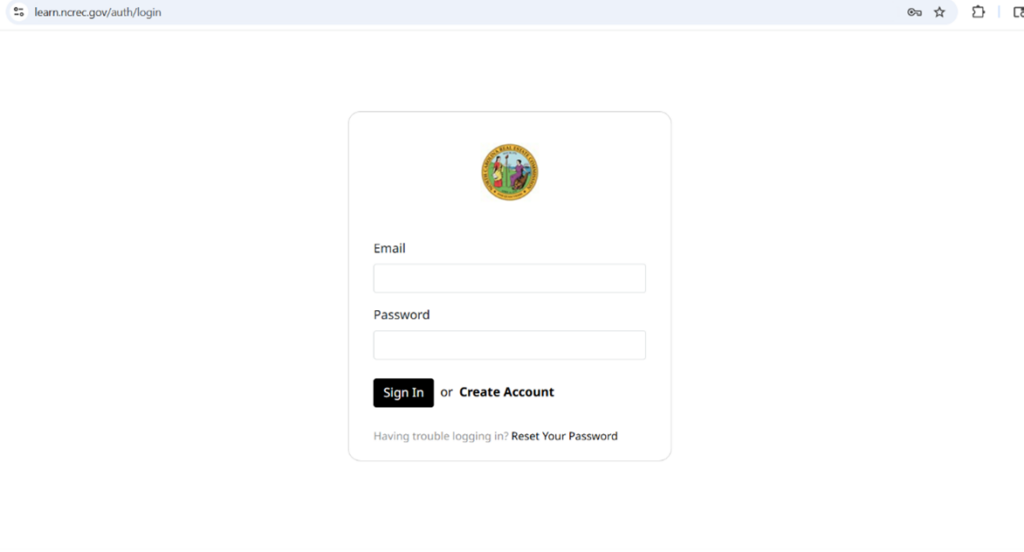
NCREC is pleased to announce a new partnership with DigitalChalk, and the launch of a modernized training portal designed to enhance course administration and deliver a more intuitive, efficient, and dependable learning experience for all Commission-offered courses such as the 12-Hour BIC Course and the Trust Account Course.
How to Access the Training Portal:
1. Visit learn.ncrec.gov.
2. On your first visit, create an account using your email address as your username.
3. Browse the course catalog and purchase the courses you want.
4. After purchase, your course will appear under “Courses” in the left-hand menu. 5. For questions or technical assistance, email EDUC@ncrec.gov.
Reminder: Complete Your CE Today!!
Script: Don’t wait until the last minute to complete your 8-hour continuing education requirement! Finishing your courses early helps you avoid the stress and scheduling conflicts that can come with waiting until the deadline. Completing CE before June 10th and renewing your license by June 30th is essential to keeping your license active—missing these dates could result in an inactive or expired license, which means you cannot provide brokerage services starting July 1st. Getting your CE done early also ensures you stay current on License Law and Commission rule changes. If you haven’t registered for your continuing education classes yet, now, at the beginning of this new year, is a great time to do so!
New Year, New Goals!

Did you create a resolution for 2026? Do you need resolution ideas?
One resolution to embrace is a renewed commitment to increasing your brokerage knowledge and compliance. Staying current on NCREC rules and legal updates, while completing continuing education early and with intention, strengthens competence and confidence. Ongoing learning in areas such as material facts, agency, risk management, and emerging industry issues, helps brokers make informed decisions, reduce liability, and consistently meet their requirements under License Law and Commission rules.
Another important resolution is to lead every transaction with competence, fairness, and integrity. Prioritizing fair housing compliance, clear communication, and unbiased treatment of all consumers reinforces public trust and confidence in real estate brokerage.