Bulletin Search
Tech Corner: Think Before You Connect

Real estate licensees often have the flexibility to work anywhere. Whether you’re responding to emails from a coffee shop, reviewing documents on vacation, or sending contracts between appointments, public Wi-Fi can be a convenient way to stay connected. But convenience can come with risks.
Public Wi-Fi networks are often unsecured, making it easier for cybercriminals to intercept information transmitted over the network. If you’re accessing your email, cloud storage, transaction management platform, or other business accounts while connected to these networks, sensitive client information could be exposed without proper precautions.
One way to add an extra layer of protection is to use a Virtual Private Network (VPN). A VPN encrypts your internet traffic, making it much more difficult for others on the same network to view the information you’re sending or receiving. While a VPN does not eliminate every cybersecurity risk, it can significantly improve your security when using public Wi-Fi. Many VPN services are inexpensive, easy to install, and work automatically once enabled, making them a worthwhile investment for brokers who frequently work on the go.
One of the safest options is to use your mobile phone’s personal hotspot instead of connecting to public Wi-Fi. Because your hotspot uses your cellular network, it generally provides a more secure connection than a public Wi-Fi network.
If using public Wi-Fi is your only option, avoid accessing accounts that contain confidential or financial information unless you’re using a trusted VPN. Whenever possible, wait until you’re connected to a secure network before logging into your brokerage’s transaction platform, opening client files, or sending documents that contain personal information. Make sure your devices are set to connect only to networks you choose, rather than automatically joining available Wi-Fi networks.
It’s a good idea to enable multi-factor authentication (MFA) on your accounts. Even if someone obtains your password, MFA provides an additional layer of protection by requiring a second form of verification.
Technology allows brokers to serve clients from virtually anywhere, but mobility should never come at the expense of security. Taking a few simple precautions when connecting can help safeguard client information, protect your business, and reduce the risk of unauthorized access.
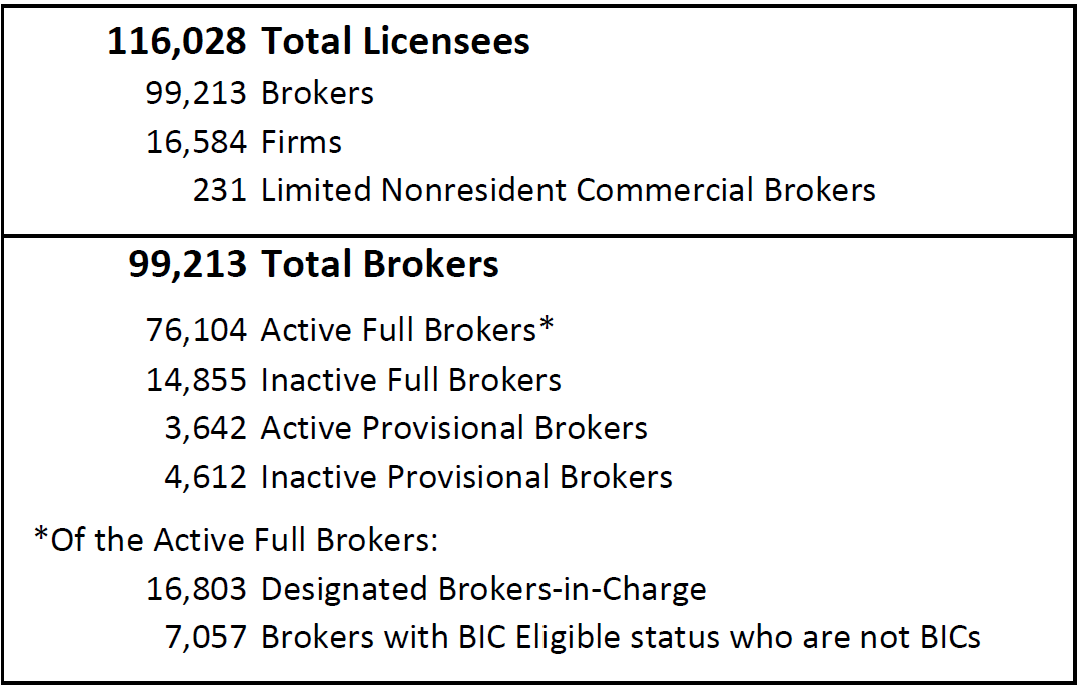
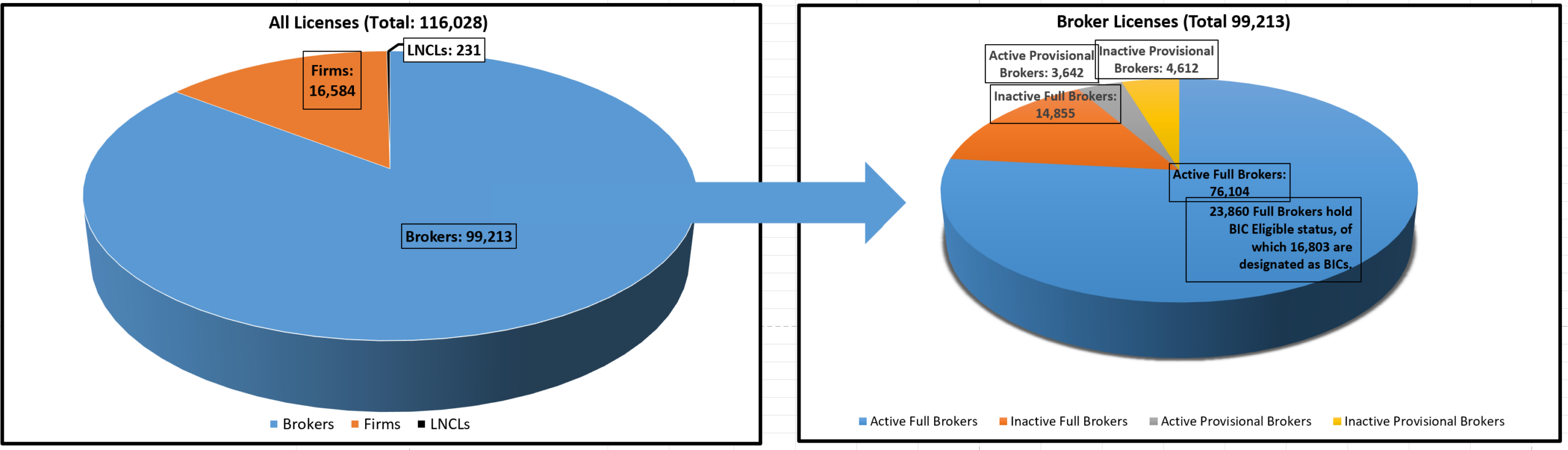
The Legislative Updates Brokers Need to Know
Two key pieces of legislation were recently enacted that affect real estate brokerage in North Carolina.
The North Carolina Farmland and Military Protection Act, restricts certain prohibited foreign parties from purchasing, acquiring, leasing, or holding a direct interest in agricultural land or land within a 50-mile radius of a military installation. The list of prohibited foreign parties, as determined by the U.S. Department of State, is contained in The International Traffic in Arms Regulation. This list can change as there are shifts to foreign policy and/or changes to national security threats. Though the law was enacted on July 7, 2026, the restrictions will not take effect until April 1, 2027. Under this new law, a buyer of affected land is required to provide an affidavit, no later than the time of closing, attesting that the buyer is not a prohibited foreign party and is otherwise in compliance with the law. The Commission has been directed to create a form for the affidavit that will be attested to by the buyer. The law also requires that the Commission, in conjunction with the North Carolina Department of Veterans and Military Affairs, develop a map that identifies affected land within a 50-mile radius of a military installation and maintain the map on the Commission website. The form and map will be available by April 1, 2027, at www.ncrec.gov.
The Current Operations Appropriations Act of 2026 was also signed into law on July 7, 2026. In addition to establishing the State’s budget, the law transformed who makes appointments of Commission members. There are nine members appointed to serve on the Commission. Prior to the passage of this Act, seven members were appointed by the Governor and two were appointed by the General Assembly (one upon the recommendation of the President Pro Tempore of the Senate and one upon the recommendation of the Speaker of the House of Representatives). The allocation of appointments has changed as follows: two members appointed by the Governor, four appointed by the General Assembly (two upon the recommendation of the President Pro Tempore of the Senate and two upon the recommendation of the Speaker of the House of Representatives), one by the State Auditor, and two by the Commissioner of Labor. The law phases in the changes to appointments in chronological order of the expiration of current members.
For questions related to these recent legislative changes, contact the Regulatory Affairs Division at (919) 719-9180.
Disciplinary Actions
JOY AUTEN (BELMONT)- The Commission accepted the permanent voluntary surrender of the real estate license of Auten, effective July 15, 2026. The Commission dismissed, without prejudice, allegations that Auten violated the provisions of the Real Estate License Law and the Commission Rules. Auten neither admitted nor denied misconduct.
KIMBERLY CONEN (CHAPEL HILL)- By Consent, the Commission suspended the broker license of Conen for a period of 12 months, effective February 18, 2026.The Commission found that Conen scheduled a showing appointment for her buyer client at an occupied listing. On the day of the showing, Conen provided her client with the lockbox code for the property. The buyer used the lockbox code to gain entry to the property without Conen present.
CRAIG DAUGHERTY (CORNELIUS)- By Consent, the Commission reprimanded Daugherty effective July 31, 2026. The Commission found that Daugherty, as the Broker-in-Charge for Fathom Realty NC LLC, allowed the firm to advertise a property for sale without the written permission of the true owner of the property.
KAREN DEFELICE (CHARLOTTE)- By Consent, the Commission suspended the broker license of DeFelice for a period of 12 months, effective July 1, 2026. The Commission then stayed the suspension in its entirety upon certain conditions. The Commission found that DeFelice acted as the listing agent for a property that was subject to a Homeowners Association (hereinafter “HOA”). During the transaction, the buyer’s agent inquired as to whether the HOA imposed any rental restrictions. DeFelice misrepresented that there were no rental restrictions. After the transaction closed, the buyer discovered that the HOA did, in fact, impose rental restrictions, including a cap. It was further determined that the HOA’s rental restrictions were readily accessible on the HOA’s website. DeFelice failed to make reasonable efforts to verify the accuracy of her representation regarding the existence of rental restrictions before making that representation.
FATHOM REALTY NC LLC (CARY)- By Consent, the Commission reprimanded Fathom Realty NC LLC, effective July 31, 2026. The Commission found that Fathom Realty NC LLC advertised a property for sale without the written permission of the true owner.
XUEYING LI (LAWRENCE TOWNSHIP)- By Consent, the Commission suspended the broker license of Li for a period of 24 months, effective June 1, 2026. The Commission then stayed the suspension following a two-month active period upon certain conditions. The Commission found that Li acted as a buyer agent on behalf of an investor entity of which she is the organizer and president. In multiple transactions, Li failed to deliver due diligence fees in a timely manner, terminated contracts based on inspections without paying the fees, and indicated on offer forms that Residential Property and Owners Association Disclosure Statements were not provided, although listing agents made them available on Multiple Listing Service sites to which Li had access. Li failed to use her name as listed on her broker license in documentation and advertising. Li failed to provide all requested documents upon request by Commission staff. Li paid the previously unpaid due diligence fees.
RAGHAVA NALAMADA (CARY)- Following a hearing, the Commission revoked Nalamada’s broker license, effective April 27, 2026, with no right to reapply for three years. The Commission found that, as a qualifying broker and broker-in-charge of RTP Properties NC, Inc., Nalamada commingled trust and operating funds, used trust funds for firm expenses, failed to designate trust accounts, failed to maintain required trust account records, monthly three-way reconciliations, and an adequate audit trail, and failed to properly account for client funds, resulting in trust account shortages exceeding $177,000. The Commission also found that, in approximately 55 of 57 sales transactions, Nalamada failed to timely execute buyer agency agreements and provide the Working With Real Estate Agents disclosure as required and failed to ensure the firm’s compliance with Commission trust account and agency requirements.
RTP PROPERTIES NC INC. (CARY)- Following a hearing, the Commission permanently revoked RTP Properties NC, Inc.’s firm license, effective May 1, 2026. The Commission found that RTP Properties NC, Inc. commingled trust and operating funds, used trust funds for firm expenses, failed to designate trust accounts, failed to maintain required trust account records, monthly three-way reconciliations, and an adequate audit trail, and failed to properly account for client funds, resulting in trust account shortages exceeding $177,000. The Commission also found that, in approximately 55 of 57 sales transactions, RTP Properties NC, Inc. failed to timely execute buyer agency agreements and provide the Working with Real Estate Agents disclosure as required.
PAMELA SABO (MARSHALL)- By Consent, the Commission reprimanded Sabo, effective July 31, 2026. The Commission found that Sabo was contacted by a fraudster who asked her to sell a parcel of vacant land on his behalf. Sabo failed to verify the fraudster’s identity and listed the property for sale for 2 days before discovering the scam, at which point the listing was removed.
JOHN SPRINGSTEED (CHARLOTTE)- By Consent, the Commission suspended the broker license of Springsteed for a period of 24 months, effective December 17, 2025. The Commission found that Springsteed listed a property on behalf of his seller clients. During the course of representation, Springsteed submitted his own offers to purchase the property without advising his seller clients of the potential conflict of interest, their right to terminate the listing agreement, or their right to seek independent counsel from a private attorney or another licensed broker. Springsteed did not terminate the listing agreement despite his seller clients’ requests. While the sellers were under contract with another buyer, Springsteed disclosed confidential information about the terms of the pending contract with another potential buyer without the parties’ consent.
DENISE WILSON (HARRISBURG) – By Consent, the Commission reprimanded Wilson, effective July 31, 2026. The Commission found that Wilson was contacted by a fraudster who asked her to sell a vacant lot on his behalf. Wilson failed to conduct sufficient due diligence to determine whether the fraudster was the true owner of the property and to ascertain whether the fraudster had advertised the property for sale. The property went under contract and was sold.
Appearances
July 2026 Presentations
Steve Fussell, Chief Consumer Protection Officer, spoke at TradeMark Properties on July 14th.
Lyndi James, Auditor/Investigator, spoke at Jacksonville Board of REALTORS® on July 16th.
Bruce Rinne, Information Officer, spoke at Compass on July 21st.
Kristen Fetter, Assistant Director of Regulatory Affairs, spoke at Greensboro Regional REALTORS® Association on July 23rd.
August 2026 Presentations
*These presentations are subject to change due to the availability of Commission members and/or staff. *
Dee Bigelow, Information Officer, will speak at eXp Realty, LLC on August 5th.
Mel Black, Commission Member, will speak at Durham Regional Association of REALTORS® on August 10th.
Bruce Rinne, Information Officer, will speak at BHHS Carolinas Realty on August 12th.
Brian Heath, Consumer Protection Officer, will speak at Aldridge & Southerland Inc. on August 18th.
Are you sure your continuing education course was reported to the Commission? Have you checked your license record lately to make sure your license is still active?
Recently, some brokers learned their continuing education (CE) courses were not reported to the Commission by their education provider although they successfully completed them prior to June 10, 2026.
Unfortunately, these errors resulted in some brokers’ licenses being placed on inactive status due to education providers not accurately reporting their 2025-2026 CE course completions.
Under Rule 58H .0207(f), education providers are required to submit course completion reports to the Commission within 7 calendar days after a broker completes a course. While errors are uncommon, they can happen—and the consequences can affect a broker’s ability to practice real estate.
To help avoid unexpected issues at license renewal, brokers should:
- verify that their course completion certificate is accurate, particularly their name and license number,
- log in to www.ncrec.gov within 10 days after completing a CE course to confirm the course has been posted to their license record, and
- contact the education provider immediately if the course has not been reported or if any information is incorrect so the education provider can correct the error and submit the course completion information as required by License Law and Commission rules.
Brokers should not send course completion certificates to the Commission. Rule 58H .0207(f) places the responsibility for reporting course completions on the education provider.
A quick review of your license record only takes a few minutes, but it can help prevent your license from being placed on inactive status and avoid an unexpected interruption to your brokerage activities.
Melvin “Skip” Alston Elected Chair, Robert J. Ramseur, Jr., Vice Chair
Executive Director Janet Thoren announced that Melvin “Skip” Alston of Greensboro has been elected as Chair and Robert J. Ramseur, Jr., of Raleigh as Vice Chair of the North Carolina Real Estate Commission. Their terms will begin on August 1, 2026.
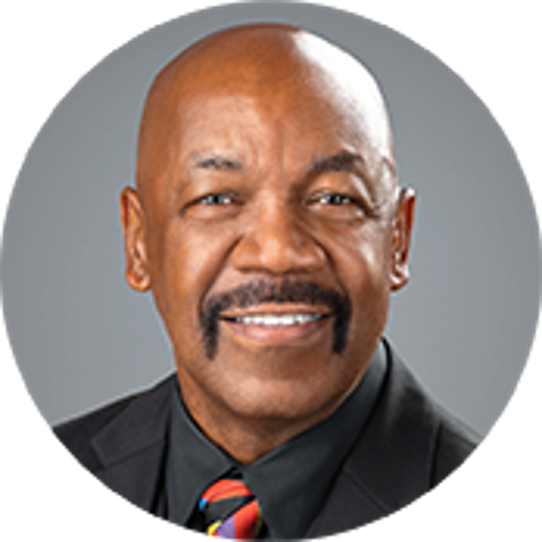
Melvin “Skip” Alston was appointed to the Commission by Governor Roy Cooper on October 9, 2024. Mr. Alston is the owner and founder of The Alston Realty Group, Inc. in Greensboro, NC, which has been in continuous operation serving the greater Greensboro area for over 42 years. A recipient of the Order of the Long Leaf Pine, Mr. Alston has served as a leader in his community, across North Carolina and the nation since 1987. He has served in numerous capacities and on several Boards. He has served on the Guilford County Board of Commissioners for 29 years, including 11 years as chairman. He is also a Diamond-Life Member of the NAACP and has served on their local, state and national levels for over 25 years. Mr. Alston has also served as the North Carolina NAACP President.
He is the Co-Founder and Co-Chairman of the Board of Directors for Sit In Movement, Inc. a nonprofit corporation formed for the purpose of purchasing and renovating the Historical Woolworth Building in downtown Greensboro into an International Civil Rights Center and Museum, which opened February 1, 2010.
Mr. Alston previously served on the North Carolina Real Estate Commission, appointed in 2003 by the Speaker of the House and elected Chairman of the Commission in 2007 and again in 2008.
A Durham native, Mr. Alston attended North Carolina Central University, with a major in Business Administration. He has been licensed as a broker since 1982. Mr. Alston, his wife Gwendolyn and their adult sons, DeSean and Ryan, are based in Greensboro and are all North Carolina real estate brokers.

Ramseur is a partner at Ragsdale Liggett PLLC. His practice focuses on residential and commercial real estate transactions, lease drafting and negotiation, construction and development, tax and entity structuring, and real estate litigation.
Ramseur is a former member of the Real Estate Commission. He was previously appointed by Governor Pat McCrory in 2015 and has served in the past as Commission Chair.
He is a member and the current chair of the Joint Forms Task Force for the North Carolina Bar Association and the North Carolina Association of REALTORS®. Ramseur holds a JD and a BA from Wake Forest University.
A Brief History of Real Estate Regulation in North Carolina
Did you know that 2027 will mark the 100th year of real estate regulation in North Carolina? In 1927, the General Assembly created the first North Carolina Real Estate Commission. It consisted of three members, each with at least five years’ experience in the profession, appointed by the Governor to three-year terms after the initial staggered terms. According to North Carolina Public-Local Laws of 1927, Chapter 241, members were required to select a chairman from their number, adopt necessary rules and regulations, employ assistants and clerical staff, maintain copies of proceedings and records, and receive compensation for their service.
The 1927 Act differentiated between real estate brokers and real estate salesmen. A broker was defined as a person, corporation, or firm who for compensation sold, auctioned, exchanged, bought, leased, or rented real estate. A salesman (sic) was defined as any person who for compensation was engaged by a broker to perform any of the above-mentioned real estate activities.
The major responsibility of the Commission was to issue licenses, renewable annually, for those wishing to engage in the real estate profession. All applicants were to be of good character and competent in the profession. Further, every applicant had to provide the Commission with two letters of recommendation from real estate owners from their county of residence, attesting to their reputation and competency. Brokers were also required to provide information on the firm with which they were associated. Applicants for a salesman’s license were to include information on previous real estate experience, the companies with which they were employed, and statements from their last employers. Also, all applications were to be accompanied by required fees.
An application could be refused if the Commission determined that an applicant was unqualified. In such cases, a hearing could be held to review the application. Licenses could be revoked for a variety of fraudulent, dishonest, or improper actions, including misrepresentation, making false promises, acting for more than one party without the knowledge of all parties, and incompetency. Before revocation, the Commission had to conduct a hearing at which the Respondent had the right to be represented by counsel. The District Superior Court had the right to review all Commission decisions in such cases. The Commission could also impose penalties for violation of this law. Moreover, upon conviction a person or firm could be liable for fines or imprisonment.
The 1927 law was declared discriminatory and unconstitutional by the North Carolina Supreme Court in the landmark case, State vs. Warren. However, this case only applied to eight counties in the state and was challenged legally. In January 1937, the North Carolina Supreme Court declared that the law was discriminatory and unconstitutional, contravening Article I, Section 7, of the North Carolina State Constitution, since it applied only to real estate brokers and salesmen in eight designated counties and not to those in other counties.
Later in 1937, the General Assembly again enacted legislation to regulate the real estate profession. Definitions of real estate brokers and salesmen were appropriated from the 1927 law. Like the earlier Commission, the 1937 Commission was to receive applications and issue licenses. Qualifications enunciated in the 1927 law were repealed, with the exception that applicants had to pass a written examination administered by Commission representatives. Individuals engaged in the real estate profession for at least a year before the effective date of this legislation were to be exempted from taking the examination. Reasons for revocation and suspension of licenses were also repealed from the 1927 law, including provisions for hearings, the right to counsel, and the right to appeal to the Superior Court.
Although the 1937 law went into effect on June 1, 1937, sixty-four counties were exempted by the legislature, and once again the law was challenged in court. In March 1939, the North Carolina Supreme Court handed down a decision declaring the Real Estate License Act of 1937 to be unconstitutional. The court held that since the act set up state-wide requirements for real estate licensing but only applied them to thirty-six counties, it was discriminatory and was in fact a local act regulating trade in contravention of Article III, Section 29, of the North Carolina State Constitution. Accordingly, the General Assembly later that month abolished the North Carolina Real Estate Commission and liquidated its assets. It would be eighteen years before the state again attempted comprehensive regulation and licensing of the real estate profession in North Carolina.
The current North Carolina Real Estate Commission was established in 1957 by the General Assembly under Chapter 93A of the General Statutes. Since its inception, the North Carolina Real Estate Commission has issued licenses with consecutive numbers. License number 1 was issued to CE Phillips in 1957. That license is on display at the Durham Regional Association of REALTORS® where he served as President. At the time of this publication, the Commission has issued 367,700 broker, 42,746 firm, and 1,030 limited nonresident commercial licenses.