Bulletin Search
Employment Opportunities Available
Are you interested in joining the staff of the North Carolina Real Estate Commission? From time to time, employment opportunities become available. They are posted on the Commission’s website under the “About Us” tab. Click here for more info.
The First Outreach Commission Meeting of 2023 Was a Success
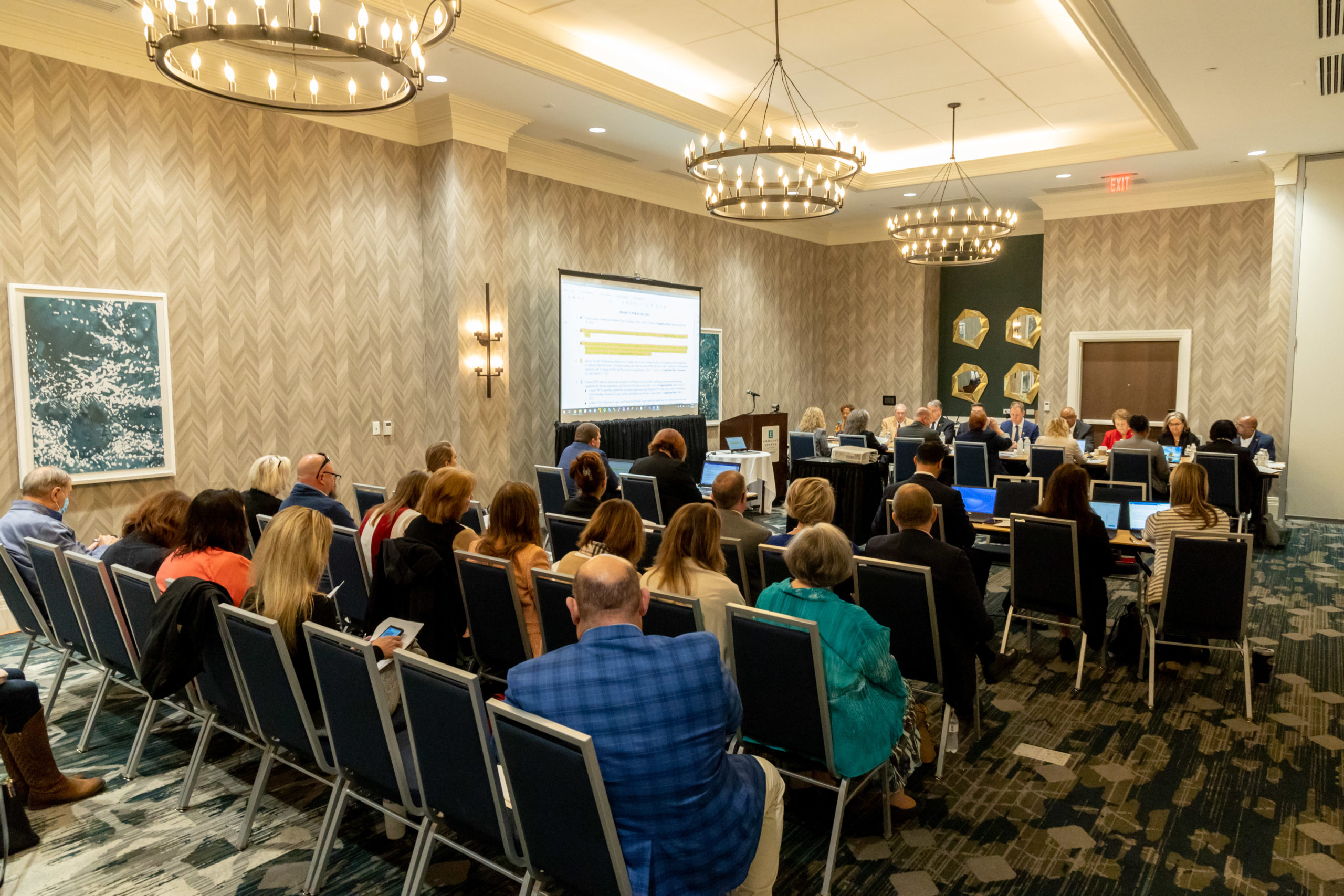
The Commission held its January 2023 meeting in Wilmington, NC as the first location for the new year, as part of its outreach initiative. The Commission welcomed local brokers, the public, representatives of the Cape Fear Realtors®, and State representatives as well. If you missed it or other meetings you can view them here.

Tech Corner: Security Procedures

Are you using an electronic service provider for electronic signatures and to store and retain your documents?
Have you evaluated whether your documents are secure?
The Commission does not recommend any electronic service provider over another. Most importantly, the electronic service provider selected by a brokerage must satisfy minimum legal requirements under the Uniform Electronic Transactions Act (UETA).
Brokers should ensure they secure the confidential information from clients or customers upon receipt and while conveying (e.g. phone, email, text, etc.) their information to others. Brokers should take reasonable steps to determine if the electronic service provider has features and security procedures within the system that will protect the integrity of their clients’ information.
According to G.S. 66-312(15), the UETA defines security procedures as:
…a procedure employed for the purpose of verifying that an electronic signature, record, or performance is that of a specific person or for detecting changes or errors in the information in an electronic record. The term includes a procedure that requires the use of algorithms or other codes, identifying words or numbers, encryption, or callback or other acknowledgement procedures.
There are a multitude of resources available to ensure your compliance with the Uniform Electronic Transactions Act. You can access additional information regarding security procedures for electronic service providers here.
If you have any further questions or comments, please contact the Commission at 919.875.3700 or educ@ncrec.gov.
What Do You Know about Wire Fraud?
Do you know the latest scams used by hackers to conduct wire fraud? Have you or a client been a victim of wire fraud? Would you like to learn more about wire fraud and how to prevent it?
The North Carolina Real Estate Commission, North Carolina Bar Association and Investors Title Insurance Company are collaborating to present a Wire Fraud Conference for attorneys, brokers, and other interested persons in North Carolina this year.
The Wire Fraud Conference will address:
- common myths about wire fraud,
- wire fraud prevention tactics, and
- the liability of brokers and attorneys when wire fraud has occurred.
Brokers will receive four (4) hours of continuing education elective credit if they successfully attend the conference.
If you would like to attend the Wire Fraud Conference, please click here for additional information and conference session dates.
The first session for the Wire Fraud Conference will begin on March 2, 2023. Brokers may register for any session; however, early bird registration ends three (3) weeks prior to any session date.
Would you like to register now? Click here.
Do Free Real Estate Continuing Education Courses Violate RESPA?
Has a settlement service provider offered to “sponsor” your continuing education course? Was the course free of charge?
The Real Estate Settlement and Procedures Act (RESPA), regulates federally related mortgage loans on residential real property. RESPA, specifically Section 8(a), prohibits current or futurereferral sources from receiving kickbacks, unearned fees, or “things of value” from settlement service providers.
Question: What is a settlement service?
Answer: A settlement service is any service provided in connection with a real estate settlement for which the buyer or seller will pay. The services include, but are not limited to:
- title searches, examinations, or insurance,
- property surveys,
- services rendered by an attorney,
- origination of a federally related mortgage loan (loan applications, loan processing, and the underwriting and funding of loans)
- pest and fungus inspections, and
- home inspections.
Question: What is considered a “thing of value?”
Answer: A “thing of value” is any payment, advance, funds, loan, service, or other consideration with more than nominal value.
Therefore, if a settlement service provider offers real estate continuing education courses free of charge to a broker, the settlement service provider and the broker who attends the course may be in violation of RESPA. Additionally, if a service provider pays the continuing education course fee for the broker directly to an education provider or reimburses the broker for the course fee, the settlement service provider and the broker are still violating RESPA because the free continuing education course is a “thing of value.”
The Consumer Financial Protection Bureau published a set of frequently asked questions (FAQs) discussing RESPA Section 8 and its application to Marketing Services Agreements, Gifts and Promotional Activities. You can view the FAQs here.