Bulletin Search
Vickie Gallimore, Appointed to the NC Real Estate Commission and William “Bill” Aceto and Robert J. Ramseur, Jr. Reappointed
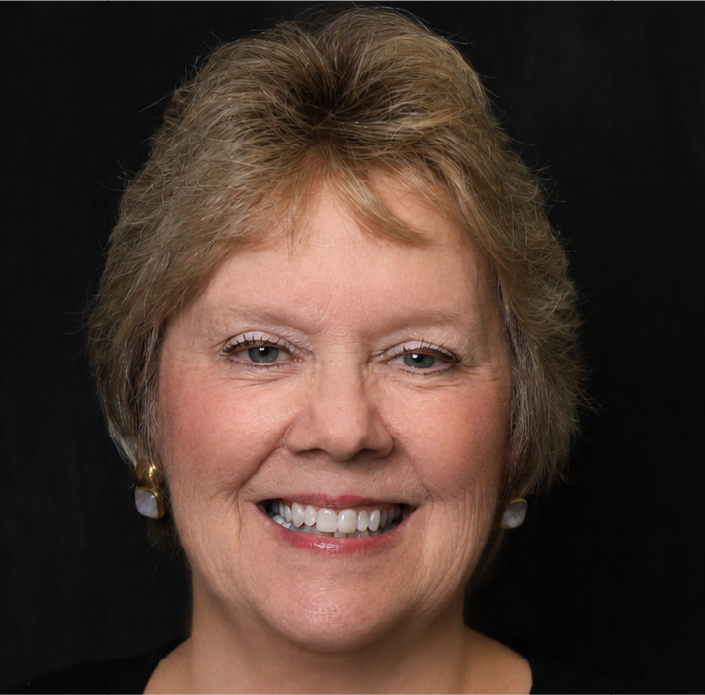
Vickie Gallimore of Asheboro has been appointed to the North Carolina Real Estate Commission. She was appointed by the General Assembly, and her term will expire on July 31, 2029.
Vickie Gallimore is the Broker/Owner of RE/MAX Central Realty in Asheboro, North Carolina, where she has practiced real estate for nearly four decades. A lifelong resident of Randolph County, Ms. Gallimore has built a distinguished career serving buyers and sellers throughout the region and is consistently recognized among North Carolina’s top-producing REALTORS®. Her experience includes residential, luxury, commercial, relocation, and investment real estate, as well as brokerage leadership and business development.
Throughout her career, Ms. Gallimore has received numerous professional honors, including the RE/MAX Circle of Legends, RE/MAX Hall of Fame, RE/MAX Lifetime Achievement Award, and multiple RE/MAX Pinnacle and Diamond Awards. She has also been recognized as the #1 Sales Agent in Randolph County for listings and sales from 1988 through 2025 and has led one of North Carolina’s top-producing RE/MAX offices. She holds numerous professional designations and certifications, including Certified Residential Specialist, Graduate REALTOR® Institute, Accredited Buyer’s Representative, and Certified Luxury Home Marketing Specialist.
Ms. Gallimore has a longstanding commitment to community service and leadership. She currently serves on the Randolph Community College Foundation Board and the Randolph County Development Corporation Board and has been a member of the Randolph Rotary Club since 1990. Her previous community service includes leadership with Hospice of the Piedmont, the Asheboro/Randolph Chamber of Commerce, the American Cancer Society, and other civic and economic development organizations. She also started the first Relay for Life Walk in Randolph County and successfully raised money for cancer research. Further, her service has been recognized with the North Carolina Governor’s Award for Volunteer Service, the Jack H. Brown Memorial Community Service Award, and the Asheboro/Randolph Chamber of Commerce Athena Award.
Ms. Gallimore is also a member of a family deeply rooted in real estate. Her husband is a commercial broker, and both of their children, Brian and SarahBeth Gallimore, and their daughter-in-law, Sarah, hold North Carolina real estate licenses. Brian and Sarah actively practice real estate alongside their mother at RE/MAX Central Realty. A proud mother and grandmother of five, Ms. Gallimore continues to combine her professional experience, community commitment, and knowledge of North Carolina real estate in service to the profession and the people of her community.

William “Bill” Aceto was reappointed to the Commission by the General Assembly. His term will expire on July 31, 2029. Licensed since 2007, Aceto specializes in investment properties, commercial real estate, development, large acreage tracts, building lots, residential brokerage and long-term property management. As a REALTOR® committed to property owners’ rights, Aceto also personally invests in rental properties, land tracts, and residential properties in the High Country. Aceto and his Blue Ridge Realty & Investments partner, Todd Rice, also co-founded and operate Blue Ridge Professional Property Services, LLC, Boone High Country Rentals, and Ashe Rental Agency.
Having held leadership positions for the High Country Association of REALTORS®, including President in 2019, Aceto was named the 2020 High Country Association REALTOR® of the Year. Aceto is active in the North Carolina REALTORS® and was a 2015 Graduate of the NC REALTORS® Leadership Academy. He has been the Chair of the NC Real Estate Commission, Chair of NCR Legislative and RPAC Committees as well as its Property Management Division (PMD) and was also a Federal Political Coordinator for NAR® for over 10 years. Additionally, he has served as a public member on the North Carolina Building Commission, is a former member of the Town of Boone Board of Adjustment (ETJ Alternate), and past Chairman of the Watauga County Board of Elections.
He graduated from Appalachian State University with a degree in Political Science with minors in Business and Criminal Justice and served as the Chair of Appalachian State Board of Visitors.
Bill lives in Boone with his wife, Sallie and children, Liam (9) and Maggie (7).

Robert J. Ramseur, Jr. of Raleigh, has been reappointed by the General Assembly. His term will expire on July 31, 2029. Ramseur is a partner at Ragsdale Liggett PLLC. His practice focuses on residential and commercial real estate transactions, lease drafting and negotiation, construction and development, tax and entity structuring, and real estate litigation.
Ramseur is a former member of the Real Estate Commission. He was previously appointed by Governor Pat McCrory in 2015 and has served in the past as Commission Chair.
He is a member and the current chair of the Joint Forms Task Force for the North Carolina Bar Association and the North Carolina Association of REALTORS®. Ramseur holds a JD and a BA from Wake Forest University.
Disciplinary Actions
EDNA ESPERANZA AGUILAR (RALEIGH)- By Consent, the Commission suspended the broker license of Aguilar for a period of 12 months, effective August 17, 2026. The Commission then stayed the suspension in its entirety upon certain conditions. The Commission found that Aguilar was designated as broker-in-charge for Keystar Realty & Management LLC, responsible for supervising provisional broker Mirian Alejandra Midence Flores. Aguilar failed to provide adequate supervision to ensure compliance with Commission rules regarding advertisement and disclosures during the subject transaction. Aguilar did not review or correct the advertised heated living area, which improperly included 756 square feet of unpermitted space. Aguilar failed to ensure that the provisional broker discovered and disclosed material facts, including the property’s septic capacity, and the fact that the property was misrepresented as being located on a public road when it was in fact a private street with no road maintenance agreement.
MARY ANDERSON (HAMPSTEAD)- The Commission accepted the permanent voluntary surrender of the real estate license of Anderson, effective August 19, 2026. The Commission dismissed without prejudice allegations that Anderson violated provisions of the Real Estate License Law and Commission Rules. Anderson neither admitted nor denied misconduct.
TACOMA BURNETT (WILMINGTON)- By Consent, the Commission suspended the broker license of Burnett for a period of 6 months, effective August 14, 2026. The Commission then stayed the suspension in its entirety upon certain conditions. The Commission found that Burnett advertised a 72-acre property for sale and described it as a “great opportunity” for builders and developers, when she knew that a previous soil study showed that the majority of the land was not suitable for construction.
CANDACE & CO. REAL ESTATE AND DESIGN LLC (CHARLOTTE)- By Consent, the Commission suspended the broker license of Candace & Co. Real Estate and Design LLC for a period of one-month, effective September 1, 2026. The Commission found that Candace & Co. Real Estate and Design LLC failed to maintain proper records with the Commission. Over the course of five months, Commission staff attempted to investigate the complaint in this case by sending multiple letters of inquiry to Candace & Co. Real Estate and Design LLC, contacting Candace & Co. Real Estate and Design LLC via telephone, and attempting to locate Candace & Co. Real Estate and Design LLC at the physical address on file with the Commission. Candace & Co. Real Estate and Design LLC failed to respond to multiple letters of inquiry and was otherwise uncooperative with the investigation.
STEPHEN CORDELL (SMITHFIELD)- The Commission accepted the voluntary surrender of the real estate broker license of Cordell, effective August 19, 2026, with no right to reapply for 10 years. The Commission dismissed without prejudice allegations that Cordell violated provisions of the Real Estate License Law and Commission Rules. Cordell neither admitted nor denied misconduct.
CANDACE KASEY (CHARLOTTE)- By Consent, the Commission suspended the broker license of Kasey for a period of one-month, effective September 1, 2026. The Commission found that Kasey failed to maintain proper records with the Commission and failed to report a change of address within 10 days. Over the course of five months, Commission staff attempted to investigate the complaint in this case by sending multiple letters of inquiry to Kasey, contacting Kasey via telephone, and attempting to locate Kasey at the physical address on file with the Commission. Kasey failed to respond to multiple letters of inquiry and was otherwise uncooperative with the investigation.
RHEA REAVES (RALEIGH)- The Commission accepted the voluntary surrender of the real estate broker license of Reaves, effective August 19, 2026, with no right to reapply for 2 years. The Commission dismissed without prejudice allegations that Reaves violated provisions of the Real Estate License Law and Commission Rules. Reaves neither admitted nor denied misconduct.
DONALD SMITH, JR. (LELAND)- By Consent, the Commission suspended the broker license of Smith for a period of 3 months effective August 14, 2026. The Commission found that Smith, as the Broker-in-Charge of a firm, allowed two brokers affiliated with the firm to advertise a 72-acre property for sale and describe it as a “great opportunity” for builders and developers, when a previous soil study showed that the majority of the land was not suitable for construction.
JEFFERY SHUGARTS, JR. (CHARLOTTE)- By Consent, the Commission reprimanded Shugarts effective August 19, 2026. The Commission found that Shugarts, while unlicensed in North Carolina, contacted a prospective commercial property buyer and acted as her buyer agent during the transaction under the auspices of the firm by whom he was employed.
VALERIY SOLODYANKIN (CHARLOTTE)- By Consent, the Commission reprimanded Solodyankin effective May 15, 2026. The Commission found that Solodyankin acted as the buyer’s agent for a client and provided the buyer with the access code to a vacant property, enabling the buyer to enter the listed property without a broker present. The buyer was identified on a security camera accessing the property.
CHRISTINA VALVERDE (WILMINGTON)- By Consent, the Commission suspended the broker license of Valverde for a period of 6 months, effective August 14, 2026. The Commission then stayed the suspension in its entirety upon certain conditions. The Commission found that Valverde advertised a 72-acre property for sale and described it as a “great opportunity” for builders and developers, when she knew a previous soil study showed that most of the land was not suitable for construction.
ANTONIO WORSHAM (MATTHEWS)- By Consent, the Commission reprimanded Worsham effective May 1, 2026. The Commission found that Worsham was the qualifying broker and broker-in-charge of Equity North Carolina Real Estate LLC. Worsham was hired to manage rental properties on behalf of its owner-client. Worsham allowed a tenant to move into one of the rentals without executing a lease agreement. The security deposit and rent were sent to Equity, and they were not disbursed for a period of six (6) months. The owner-client requested leases, payment receipts, and tenant communications from Worsham, but Worsham failed to provide any documents to the owner-client. After the owner-client terminated the property management agreement, the security deposits and rents were provided to the owner-client.
Commission Presentations
August 2026 Presentations
Dee Bigelow, Information Officer, spoke at eXp Realty, LLC on August 5th.
Melvin “Skip” Alston, Commission Chair, Mel Black, Commission Member, and Janet Thoren, Executive Director, spoke at Durham Regional Association of REALTORS® on August 10th.
Bruce Rinne, Information Officer, spoke at BHHS Carolinas Realty on August 12th.
Brian Heath, Consumer Protection Officer, spoke at Aldridge & Southerland Inc. on August 18th.
Janet Thoren, Executive Director, spoke at the NC Secretary of State’s Conference, Raising the Standard 2026: A Notary Education Conference on August 25th.
September 2026 Presentations
*These presentations are subject to change due to the availability of Commission members and/or staff. *
Kizzy Crawford Heath, Assistant Director of Education and Licensing, will speak at Coastal Plains Association of REALTORS® on September 3rd.
Michael Cowan, Consumer Protection Officer, will speak at Linda Craft Team REALTORS® on September 15th.
Bruce Rinne, Information Officer, will speak at Nest Realty Asheville on September 15th.
Brian Heath, Consumer Protection Officer, will speak at Central Carolina Association of REALTORS® on September 16th.
Jean Hobbs, Auditor/Investigator, will speak at Charlotte NARPM on September 16th.
Bruce Rinne, Information Officer, will speak at Lantern Realty and Development LLC on September 28th.
Kristen Fetter, Director of Regulatory Affairs, will speak at Coldwell Banker Advantage on September 30th.
Fair Housing: Did You Know?
Link: https://youtu.be/MdC-c2ZCtSM
Did you know that force or threats of force to interfere with another person’s fair housing rights may be a federal crime?
Under 42 U.S.C. § 3631, Criminal Interference with Right to Fair Housing, it is unlawful for any individual(s), by the use of force or threatened use of force to injure, intimidate, or interfere with (to attempt to injure, intimidate, or interfere with), any person’s housing rights because of that person’s race, color, religion, sex, handicap, familial status, or national origin.
Among those housing rights listed in the statute are:
- the sale, purchase, or renting of a dwelling,
- the occupation of a dwelling,
- the financing of a dwelling,
- contracting or negotiating for any of the rights enumerated above, or
- applying for or participating in any service, organization, or facility relating to the sale or rental of dwellings.
Violations of this federal statute may result in the following penalties:
- a fine of up to $1,000, imprisonment for up to one year, or both;
- if bodily injury results, a fine of up to $10,000, imprisonment for up to 10 years, or both; and
- if death results, imprisonment for any term of years or for life.
NOTE: The United States Department of Justice prosecuted a North Carolina man in 2020, for criminal interference with the Fair Housing Act. You can read the press release here. If you would like more information regarding this statute or to report a possible violation, contact the United States Department of Justice, Civil Rights Division.
Tech Corner: Have You Planned for Your Digital Business?

When preparing for the unexpected, most people think about physical assets, insurance policies, or contingency plans for their business. Having a plan in place is essential, as the Commission has previously discussed in its eBulletin article, “What’s Your Plan?”, which highlights Commission Rule 58A .0512 and the importance of preparing for the death or incapacity of a Broker-in-Charge (BIC) or Qualifying Broker (QB).
Most of today’s information exists online, like email accounts and client records. If you were suddenly unable to access your accounts due to an illness, emergency, or other unforeseen event, would someone know how to securely access the information needed to help manage your business?
Taking time to organize your digital assets can help protect your clients, your business, and your important records.
What Are Digital Assets? Digital assets include the online accounts, files, and devices you use to conduct business every day, such as:
- email accounts,
- cloud storage services,
- password manager,
- electronic document platforms,
- accounting or bookkeeping software,
- smartphones, tablets, and computers,
- two-factor authentication apps, and
- business calendars and contact lists.
Create an Inventory: Start by making an inventory of your important digital accounts. Your inventory doesn’t need to include passwords, but it should identify:
- the name of each account or service,
- what the account is used for,
- the email address associated with it,
- where login credentials are securely stored, and
- whether multi-factor authentication is enabled.
Use a Password Manager: Rather than storing passwords in notebooks, spreadsheets, or sticky notes, consider using a password manager.
Password managers securely store login credentials, generate strong passwords, and often provide secure emergency access features that allow a trusted individual to access your vault if needed.
Review Shared Access: Some business tools allow you to assign additional administrators or trusted users. If appropriate, review whether another authorized person should have administrative access to critical accounts. Also, remember to remove access promptly when employees or assistants no longer require it.
Keep Your Recovery Information Current: Most online accounts rely on recovery information to regain access if you forget a password or lose a device.
Periodically verify that your:
- recovery email address is current,
- recovery phone number is accurate,
- backup authentication methods still work, and
- trusted devices are up to date.
Don’t Forget Your Devices: Your smartphone may be the key to nearly every account you own. Protect it by:
- using a strong passcode or biometric authentication,
- enabling automatic device encryption,
- turning on remote location and remote wipe features, and
- installing software updates promptly.
Plan Ahead: Preparing your digital business doesn’t require creating a complicated emergency plan. It simply means thinking ahead and ensuring that important information can be securely managed if life takes an unexpected turn.
What is Preventing You from Registering for Your CE Course Today?
Would you rather spend the year choosing courses that interest you—or spend the final weeks scrambling to find a course that fits your schedule?
For the 2025–2026 license year, 2,032 North Carolina brokers went inactive because they failed to complete their required CE. Therefore, they lost active status simply because their education requirements were not completed by June 10, 2026, at 11:59PM EST. Don’t let your CE become a last-minute emergency. Take your CE now—and take it early.
Brokers should plan ahead to take their CE courses because completing your CE early allows you to select courses that fit your schedule, interests, and professional goals instead of settling for whatever is available at the last minute, which may induce stress. Life is unpredictable, but your CE deadline is not. You can control when you register for your CE courses.
Therefore, take a few minutes today to find a course, register, and put it on your calendar. Your future self will thank you—and you can avoid becoming one of the brokers who discovers too late that an unfinished CE requirement can have real consequences. Moreover, CE courses are offered in a variety of formats, which makes it easier to find an option that fits your schedule and learning preferences.
Are you looking for an in-person or “live-online” CE course?
- Visit www.ncrec.gov.
- Select Education.
- Choose Search CE Course Schedules.
- Select Search Providers to view scheduled courses.
- Refine your search by provider, instructor, or city.
- Contact the education provider directly to register.
Do you prefer a self-paced, online elective course?
- Visit www.ncrec.gov.
- Select Education.
- Choose List of Distance CE Providers.
- Review the providers offering self-paced elective courses.
- Contact the provider directly to register.
If you have any questions and/or comments about your CE requirements, please visit the Commissions Support page.
Can a seller verbally accept an offer?
Link: https://youtu.be/FwKKkrtv1Kw
In North Carolina, a verbal or “oral” acceptance of a real estate offer does not create an enforceable contract. To satisfy the Statute of Frauds and create a binding real estate sales contract, there must be a written agreement signed by all parties, and the fact that all parties have signed must be communicated to the party against whom enforcement is sought. Until all of these requirements have been satisfied, there is no contract.
This distinction is important because Commission investigations sometimes reveal brokers telling buyers, sellers, or other brokers that a seller has “verbally accepted” an offer or that the parties have a “verbal agreement.” Brokers should never use these terms. These statements are misleading and inappropriate because they may cause someone to believe a binding contract exists when it does not. When a seller says, “I accept that offer,” the seller is really just expressing a willingness to accept the offer. This statement is NOT the same as legally accepting the offer.
Would you like to learn more about offers and acceptances? Review the Commission publications, When Does an Offer Become a Contract and Questions and Answers on: Offer and Acceptance.
Announcement: The Commission names new Director of Regulatory Affairs
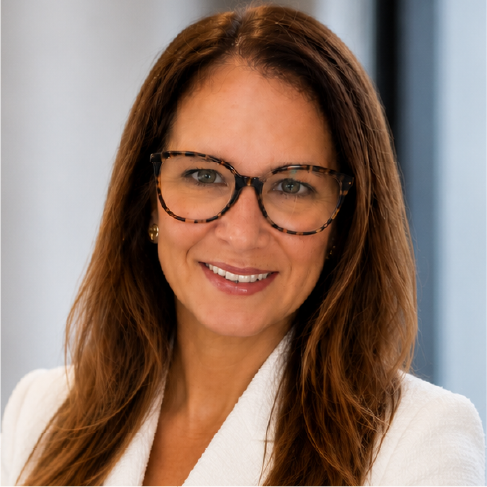
Kristen Fetter was named the Director of Regulatory Affairs for the North Carolina Real Estate Commission in August 2026. Ms. Fetter graduated from North Carolina State University with degrees in Political Science and Spanish Language and Literature. She received her law degree from the Norman Adrian Wiggins School of Law at Campbell University in 2006.
Since graduating from law school, Kristen has spent the majority of her career working in the court system. Kristen was the Trial Court Administrator in Wake County for 3 years. She served as a criminal prosecutor for nearly 12 years and is licensed to practice law in North Carolina, Arizona, and Virginia. Kristen joined the Commission’s Regulatory Affairs staff in November 2021.
As the Director of Regulatory Affairs, Kristen is responsible for overseeing all legal activities of the division, including providing legal advice and opinions to the Commission on matters related to its regulatory authority and representing the Commission in litigation.
Tech Corner: Think Before You Connect

Real estate licensees often have the flexibility to work anywhere. Whether you’re responding to emails from a coffee shop, reviewing documents on vacation, or sending contracts between appointments, public Wi-Fi can be a convenient way to stay connected. But convenience can come with risks.
Public Wi-Fi networks are often unsecured, making it easier for cybercriminals to intercept information transmitted over the network. If you’re accessing your email, cloud storage, transaction management platform, or other business accounts while connected to these networks, sensitive client information could be exposed without proper precautions.
One way to add an extra layer of protection is to use a Virtual Private Network (VPN). A VPN encrypts your internet traffic, making it much more difficult for others on the same network to view the information you’re sending or receiving. While a VPN does not eliminate every cybersecurity risk, it can significantly improve your security when using public Wi-Fi. Many VPN services are inexpensive, easy to install, and work automatically once enabled, making them a worthwhile investment for brokers who frequently work on the go.
One of the safest options is to use your mobile phone’s personal hotspot instead of connecting to public Wi-Fi. Because your hotspot uses your cellular network, it generally provides a more secure connection than a public Wi-Fi network.
If using public Wi-Fi is your only option, avoid accessing accounts that contain confidential or financial information unless you’re using a trusted VPN. Whenever possible, wait until you’re connected to a secure network before logging into your brokerage’s transaction platform, opening client files, or sending documents that contain personal information. Make sure your devices are set to connect only to networks you choose, rather than automatically joining available Wi-Fi networks.
It’s a good idea to enable multi-factor authentication (MFA) on your accounts. Even if someone obtains your password, MFA provides an additional layer of protection by requiring a second form of verification.
Technology allows brokers to serve clients from virtually anywhere, but mobility should never come at the expense of security. Taking a few simple precautions when connecting can help safeguard client information, protect your business, and reduce the risk of unauthorized access.